
What you do in the first few minutes after touching poison oak matters more than almost anything you do later. The oil behind the rash starts sinking into your skin within minutes, so a quick rinse can head off a reaction that would otherwise cost you a week or two of itching.
Most poison oak rashes are miserable but manageable at home. At Getwell Urgent Care in Southaven, we see them throughout the warm months, and the earlier one gets rinsed and treated, the better it usually goes for you. Here’s how to identify poison oak and know when you should seek to come into urgent care.
A closer look at poison oak rashes
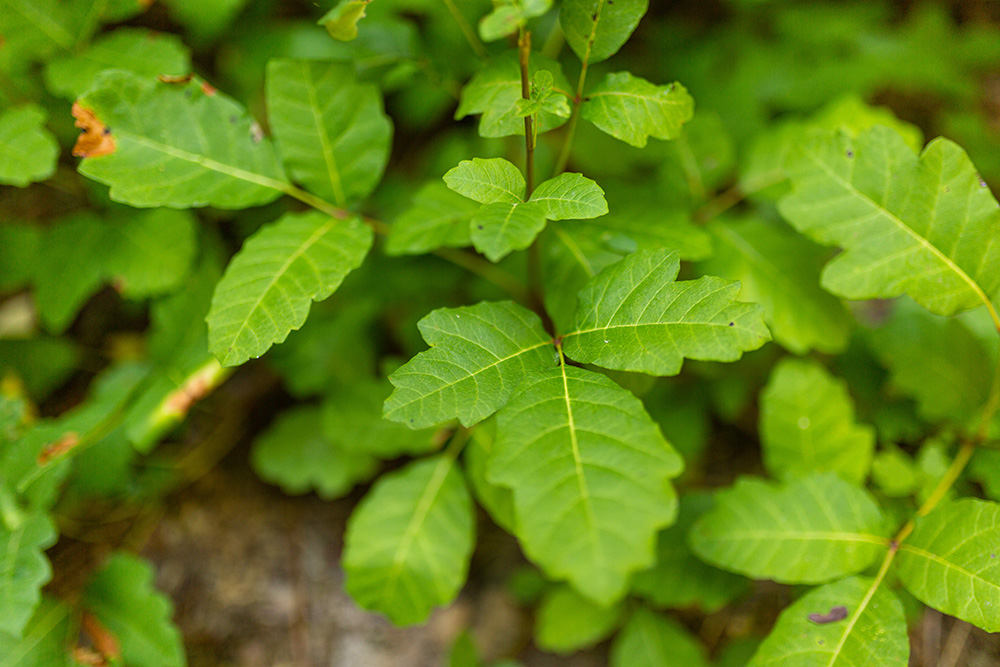
Poison oak grows across much of North America, and it’s common in wooded areas and along trails and field edges here in Southaven. On the West Coast it grows as a shrub, and in the eastern and southeastern states it shows up as a low, shrubby plant rather than the climbing vine you’d associate with poison ivy.
The rash comes from an oily resin called urushiol that coats the whole plant, leaves and stems and roots alike. You don’t need to touch a leaf directly to get it. Urushiol can remain on gardening tools and pet fur, causing a rash long after initial plant contact, as stated by the American Academy of Dermatology.
The leaves typically grow in groups of three, though poison oak can carry more, and the whole plant looks different depending on the time of year in which you encounter it. It turns orange or red in the fall and loses its leaves entirely in winter. Bare stems carry urushiol just as the leaves do, so the plant remains a hazard for anyone who gets too close year-round.
What a poison oak rash looks like
Poison oak rashes often show up as red, streaky patches that trace the path where your skin brushed against the plant. Those streaks are one of the clearest signs, and they swell into raised welts fast, with hard itching close behind. The reaction might take anywhere from a few hours to several days to appear, which is part of the reason why people have a hard time connecting it to time spent outdoors.
As the rash oak develops, small fluid-filled blisters form along the irritated skin and may weep and crust over as they heal. The blisters themselves aren’t contagious; what spreads it is leftover urushiol still sitting on your skin or clothing. According to the FDA, new patches appearing over time can happen because urushiol is absorbed at different rates on different parts of your skin, not because the rash itself is spreading.
Poison oak versus poison ivy
Poison oak and poison ivy set off the same reaction, since both carry urushiol, and your skin can’t tell the two plants apart once the oil makes contact. You can tell by looking at the leaves.
- Poison oak’s leaves are rounded and lobed, similar to oak leaves
- Poison ivy has pointed leaflets that grow in groups of three.
And while poison ivy grows across most of the country, poison oak is common in the West and Southeast.
How to treat poison oak rash at home
Most poison oak rashes clear up with a few household items you probably already own. The order of application is crucial; consider it a two-step process that both quickly removes the oil and then soothes the skin when the rash appears.
First steps after exposure
If you come into contact with poison oak, act fast. Run the affected area under cool running water immediately, preferably within 10–15 minutes, since urushiol binds to skin quickly. Use soap, but be gentle; vigorous scrubbing will only spread the oil, and don’t forget under your nails, where it likes to hide.
Afterward, remove any clothing or gear that touched the plant and wash it separately from the rest of your laundry.
Over-the-counter relief
Once the rash appears, a few pharmacy staples can make the wait more bearable for you. An over-the-counter hydrocortisone cream or calamine lotion, dabbed on a few times a day, cuts the itch and helps dry out weeping spots. Both offer sufficient relief to manage your day, though neither necessarily accelerates healing.
A cool, damp cloth held against the skin for 15 to 20 minutes does a reasonable job of calming inflammation, and if the rash has spread across a larger area, the AAD recommends a colloidal oatmeal bath.
An oral antihistamine like Benadryl won’t do much for the itch itself, but the sedating kind is worth taking at night when your discomfort peaks.
When to visit urgent care for poison oak
Most poison oak is uncomfortable rather than strictly serious, but there’s reason to come to Getwell Urgent Care to make sure.
If the rash reaches your face, eyes or genitals, the skin there is thinner and reactions can move faster than you’d expect. A widespread rash with heavy blistering across a large part of your body falls into the same category.
Keep an eye out for signs of infection. When a rash intensifies in heat, color or leaks out a cloudy fluid, it signifies bacteria have moved in, commonly because of scratching, and requires prompt treatment to halt its progression.
A serious reaction to poison oak, like trouble breathing or swallowing, requires more than urgent care — call 911.
What to expect at Getwell Urgent Care
When you come in, a provider will look over the rash, mainly to gauge how far it’s spread and how much it’s bothering you. From there, we can prescribe an oral steroid or a stronger topical cream to bring the inflammation down faster than anything on a pharmacy shelf will.
Prescription steroids are considerably stronger than over-the-counter options, and for a rash that’s widespread or genuinely uncomfortable, that difference shows up in how quickly you feel better.
If your skin looks infected, with discharge or worsening swelling, we can treat that at our facility during the same visit rather than sending you elsewhere.
Frequently asked questions
How long does a poison oak rash last?
Most last one to three weeks, depending on how much urushiol reached your skin and how strongly your body reacts to it. Lighter cases clear sooner, while heavily blistered ones take longer.
Getting treatment early and keeping your hands off the rash lowers your odds of an infection that could drag things out.
Can poison oak spread from person to person?
No, you can’t catch it by touching someone’s rash, and the blister fluid can’t pass it along either.
Only the urushiol oil itself transfers, and only while it’s still in contact with your skin or clothes. Wash that oil off and there’s nothing left to give anyone.
Is poison oak rash the same as poison ivy rash?
In terms of cause and feel, they’re very similar. Both plants carry urushiol, so your skin reacts the same way to either.
The plants look different: poison oak with lobed leaves and poison ivy with pointed leaflets — but that’s little consolation to your itching skin.
Can you get poison oak in the winter?
Yes. The plant drops its leaves, but urushiol stays active in the bare stems and roots year-round. Leafless stems are actually easier to brush against without noticing, so cool weather doesn’t put you in the clear.
Get poison oak rash treatment at Getwell Urgent Care
If your rash is spreading, showing signs of infection or just wearing you down, we’re glad to look. Getwell Urgent Care in Southaven is a walk-in clinic, so no appointment is needed.
Just come in, and we’ll work out what’s going on and get you started on relief. We’re open every day from 8 a.m. to 7 p.m.