
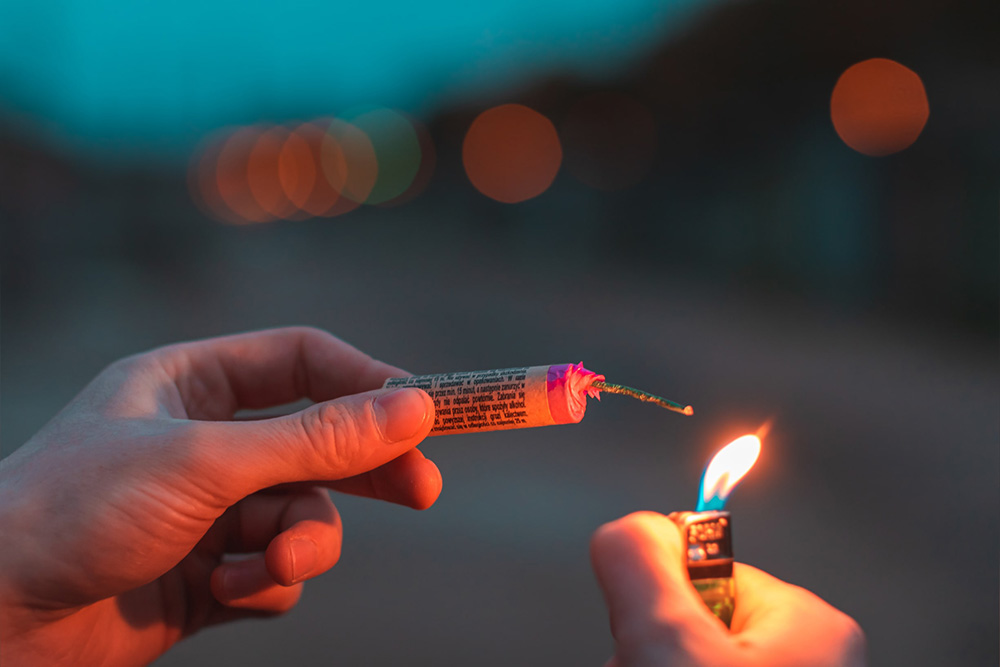
Fireworks and burns go together more often than you might plan for. A misfire can often send debris in the wrong direction, but the good news is that most fireworks burns are minor enough to be treated at urgent care, so you don’t need to spend hours in an emergency room to get proper wound care.
At Getwell Urgent Care in Southaven, we typically see at least a few fireworks-related injuries every summer, particularly around the Fourth of July. If you’ve got a burn that needs attention, walk in any day between 8 a.m. and 7 p.m. and let us examine your burn.
How burns are classified and why it matters
The severity of a burn, determined by its depth, guides the appropriate treatment. According to research published by the National Library of Medicine, burns fall into three major categories based on how far they penetrate the skin.
- First-degree burns affect only the outermost layer of skin. These types of burns are genuinely painful, but they don’t tend to blister and can typically heal on their own within just a few days.
- Second-degree burns go deeper into the skin. They’re more likely to blister and can take longer to heal.
- Third-degree burns destroy both skin layers entirely and require a higher level of medical care.
We typically classify most fireworks burns we see at our clinic as first- or second-degree burns.
What to do before you come in
There are some helpful actions you can take before arriving at our clinic. Running water over the burn for a few minutes is the highest priority; however, the Mayo Clinic says to avoid water that’s too cold, as it could actually exacerbate the situation.
Cover the burn with a clean bandage and try not to touch it before your evaluation. Blisters serve as a natural defense against infection, and popping them too soon increases your chances of complications.
What happens when you walk in for a burn
Context matters. Once you get here, we’ll first ask about the burn’s origin and when it occurred. A burn left untreated for many hours requires a different approach than a fresh burn.
We’ll examine the wound to assess its depth and size and pay close attention to its location. According to MedlinePlus, burns on the face, hands, feet or over the joints often require a higher level of care regardless of how they look on the surface.
Next, we’ll clean and dress the wound, then explain what you need to monitor at home. You’ll leave our clinic with an easy-to-follow plan if your burn shows any signs of infection that require a follow-up.
Signs that a burn may need more attention
With good wound care and patience, most minor burns heal effectively. However, a burn that initially appears minor can escalate into a more severe condition if it’s not properly managed or if infection develops in the days following the injury.
Watch for these changes after your initial visit:
- Growing redness, heat, or swelling near the wound.
- Uncommon pus or discharge.
- Fever
- Pain that shows no sign of improvement
If any of those develop, come back in. We’d rather see you twice than have a minor burn turn into a bigger problem.
Burns on the hands, face or sensitive areas
Your burn’s location changes the picture significantly. Burns to the forearm present a different scenario than those affecting fingertips or the eye area. Burns in those regions can impact function and healing differently than a burn on the arm would.
If your burn is on or near the hands, face or eyes, don’t try to manage it at home first — come see us here at Getwell Urgent Care. We can assess whether it’s something we can treat at our clinic or whether you need a higher level of care.
Bear in mind that serious eye injuries from fireworks warrant an emergency room visit.
Visit Getwell Urgent Care for fireworks burn injuries
A minor burn treated well can stay minor. If you’re not sure what you’re dealing with, or you want the wound properly cleaned and dressed, just walk into Getwell Urgent Care on Getwell Road in Southaven.
We’re open daily from 8 a.m. to 7 p.m., and you don’t need an appointment to be seen.
Come see us today.