
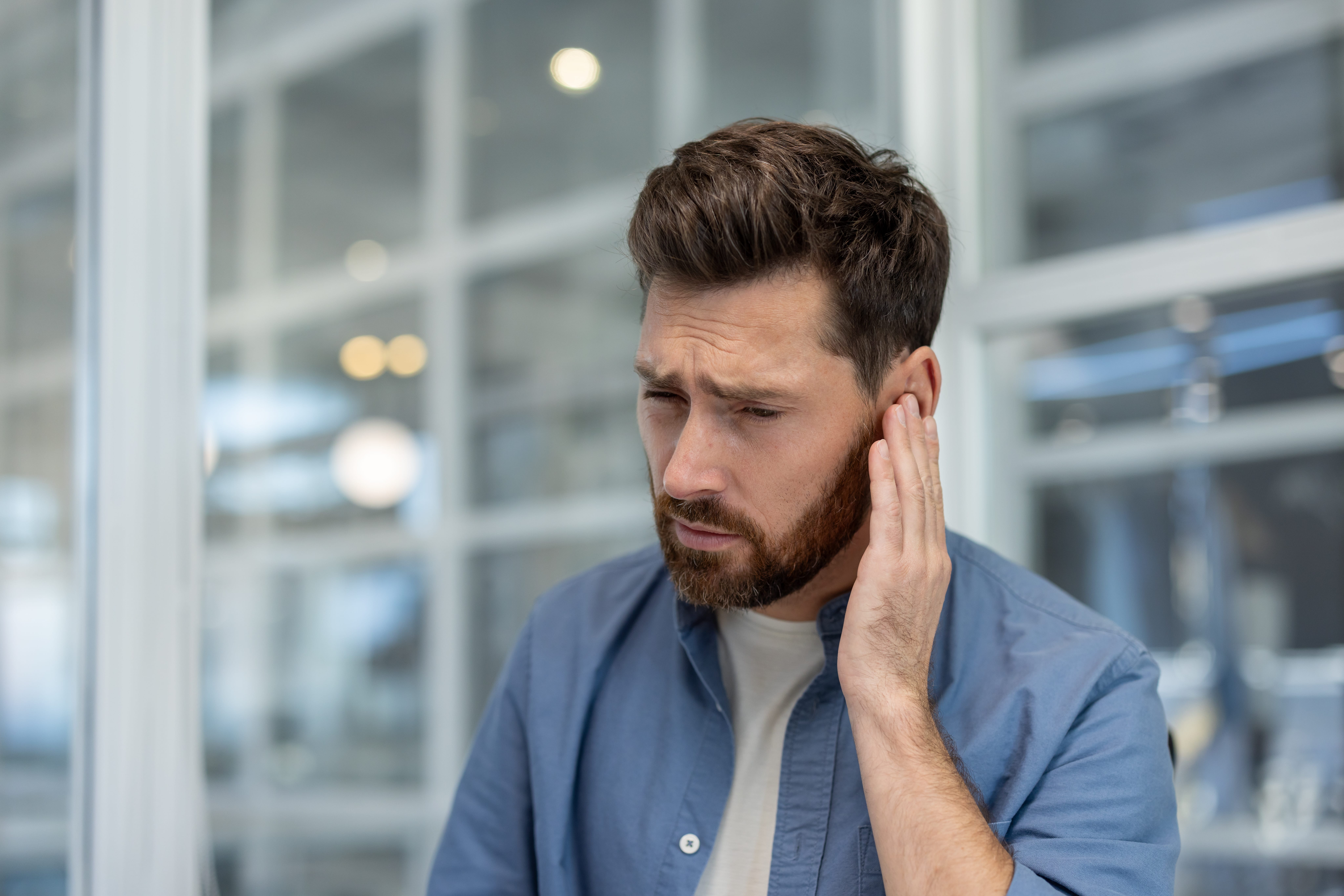
A temporary ear pop during landing is common, but most people don’t expect to still feel pressure long after the plane touches down. Fast changes in cabin pressure can strain the middle ear, preventing it from equalizing properly. For some travelers, that strain leads to a persistent blockage, muffled hearing or discomfort that refuses to go away.
At Getwell Urgent Care in Southaven, we evaluate ear symptoms after air travel seven days a week. If you experience continuous ear discomfort after a flight, we can help you find out if it’s ear barotrauma and if medical intervention is required.
How cabin pressure can disrupt your ears
You don’t notice it, but your ears are constantly adjusting to slight pressure changes. According to Stanford Medicine, this happens through the eustachian tube, which connects the middle ear to the back of your throat. Whenever you swallow or yawn, the tube opens briefly to rebalance the pressure.
Flying speeds up the entire process. Rapid pressure changes during ascent and descent can outpace the ear’s ability to adjust. When the eustachian tube doesn’t open correctly, pressure accumulates and stretches the eardrum. Many travelers notice a blocked or tight sensation as a result.
Signs your ear hasn’t fully adjusted after flying
Ear barotrauma can be subtle. Some patients say it feels like their ear is still “under pressure” even though the flight is over. You might experience:
- Fullness that doesn’t subside
- Slight hearing loss on one side
- Buzzing or ringing in your ears
- Discomfort when you yawn or swallow
- Mild dizziness
These symptoms usually appear during the aircraft’s descent, when cabin pressure changes quickly. If your eustachian tube was already irritated, it may not have responded fast enough to keep pressure regulated.
Evaluating post-flight ear pressure
An exam for ear pressure at Getwell Urgent Care after flying is usually fairly straightforward. We’ll review when the discomfort started and whether your hearing feels different than it did before travel.
Using a lighted scope, we can examine your eardrum for signs of inflammation or fluid. Observing the eardrum’s appearance helps us understand how the pressure shift affected your middle ear.
By the end of the visit, we should have a clearer sense of whether you’re dealing with barotrauma alone or if another condition is involved. If needed, we can refer you to an outside specialist for further evaluation.
Options that may help your ears recover after a flight
Sometimes ear barotrauma resolves without receiving treatment. When pressure remains trapped or inflammation is slowing recovery, professional care can make the process more comfortable for you.
Following guidance from MedlinePlus, our treatment may include:
- Medication to reduce swelling in the nasal passages
- Short-term decongestants
- Supportive care for your discomfort
- Steroids or nasal sprays
If fluid is present behind the eardrum, we can explain what that means and what changes to watch for over the next few days. We can also review whether congestion, allergies or a recent illness may contribute to your symptoms, since those factors will often delay your recovery.
If your symptoms developed alongside another concern, such as sinus pain or cold symptoms, we can address those during the same visit. Getwell Urgent Care treats both children and adults, making it easier to manage travel-related ear problems without the need for multiple appointments.
When ear pain may point to something more serious
Barotrauma causes most post-flight ear pain, and this pain improves over time. Occasionally, symptoms overlap with other conditions that require a different approach.
An ear infection can develop if fluid becomes trapped behind the eardrum. In those cases, pain may grow stronger instead of gradually easing. You might also notice:
- Fever
- Increasing ear tenderness
- Drainage from the ear
- Hearing that becomes less clear
- A feeling of fullness that deepens instead of fading
Yale Medicine notes that significant pressure changes can occasionally affect the eardrum itself. If you notice a sudden change in hearing or more intense dizziness, those symptoms should be evaluated.
Don’t ignore ongoing ear pain after flying
A slight ear pop when descending is normal, but persistent or worsening pressure is not. If your hearing doesn’t return to normal or the discomfort persists, it’s advisable to have it examined. We aim to evaluate ear pain, pressure and other non-emergency issues, so you can recover and feel more like yourself again. You’ll find Getwell Urgent Care at 6752 Getwell Rd. in Southaven, open daily from 8 a.m. to 7 p.m. Walk in whenever you’re ready to have your ear discomfort evaluated and addressed.